
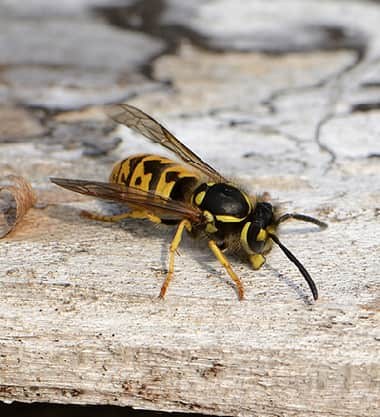
Wasps are very common around Australian homes and gardens. A few wasps flying past are usually nothing to worry about, but a steady stream of them coming and going from the same spot is a sign of a nest. This guide explains how wasps end up on your property and what you can do about it.
Why Wasps Come to Your Property
Wasps need three things: food, water and shelter. Adult wasps feed on sugar - fruit, nectar and sweet drinks - while many also collect protein such as other creatures, meat scraps and pet food to feed their young. Eaves, sheds, garages, hedges and quiet corners give them somewhere to build.
Step 1: Find Out Where the Wasps Are Going
Watch from a comfortable distance and note where wasps fly in and out. A single spot - a hole in a wall, a gap under an eave, a burrow in the lawn - points to the nest. Please don't get closer than you need to.
Step 2: Remove What Attracts Them
- Keep outdoor bins tightly closed and rinse recycling.
- Clear fallen fruit from around trees.
- Cover food and sweet drinks when eating outside.
- Bring pet food inside after feeding.
- Fix dripping taps and remove standing water.
Step 3: Make Nesting Spots Less Appealing
- Seal gaps and cracks in eaves, walls and rooflines.
- Tidy sheds and garages and keep doors closed.
- Check sheltered spots - eaves, pergolas, letterboxes and under decks - each spring, when queens start new nests.
- Trim shrubs that touch the house.
Step 4: Don't Disturb the Nest
Avoid knocking, blocking or spraying an active nest. Disturbed wasps can become more defensive, and blocking an entrance can push wasps into your home.
Step 5: Call a Wasp Removal Team
When a nest is present, it needs to be treated at the source - which is why we identify the wasp, find the nest and treat and remove it. Target Wasp Removal works seven days a week for homes and businesses. Call 0416 540 315 to request a service.
A Note on Wasps in the Garden
Wasps aren't all bad news. Many wasps eat garden caterpillars and pollinate flowers. If a nest is away from where people walk, sit or play, it is often less urgent - but a nest near a door, clothesline or outdoor dining area should be dealt with promptly.